Discover Hobart, Tasmania
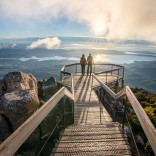
Tasmania is where Australia gets wild, creative and deliciously unexpected. This island state delivers ancient rainforests and modern art, colonial history and cutting-edge cuisine, endangered wildlife and award-winning whisky – all set against scenery that'll have you reaching for your phone's photo app every five minutes. From Hobart nothing's too far away. You could pack a wilderness hike, distillery tour and Tasmanian devil feeding session into a single day.
About our flights to Hobart
Air New Zealand offers seasonal non-stop flights between Auckland and Hobart, operating between October and March. At other times you can fly via Melbourne or Sydney. The non-stop flight time is around four hours. You can choose the way you fly on all our flights to Australia.
Five terrifically Tasmanian experiences
1. Sample single malt at Callington Mill Distillery
The only working Lincolnshire Tower Mill in the Southern Hemisphere is also a fully operational whisky distillery. At Callington Mill near Oatlands, grain is still stone-ground between massive millstones powered by wind, just as it was when the mill opened in 1837. Book a tour to climb the mill's timber staircases, watch the mechanics in action and taste the results.
2. Marvel at Picnic Rocks
On Tasmania's northeast coast, Picnic Rocks delivers one of the island's most striking colour contrasts. Orange-tinted boulders stacked along the shoreline glow against impossibly turquoise water. The rocks get their vibrant hue from lichen, and the protected bay keeps the water calm and crystal clear. Pack your togs – the shallow waters are perfect for a dip.

3. Appreciate avant-garde art at MONA
The Museum of Old and New Art gets rave reviews in the art museum world. MONA burrows underground into sandstone cliffs above the Derwent River, and its architecture is as outstanding as its art. Owner David Walsh's collection spans ancient artefacts to confronting contemporary works. The best way to arrive is by ferry from Hobart's waterfront – the 30-minute cruise builds anticipation.
4. Walk with Palawa culture on Wukalina Walk
This four-day guided walk through Wukalina (Mount William National Park) and Larapuna (Bay of Fires) is part cultural journey, part wilderness adventure. Led by local aboriginal guides, the walk shares stories, traditional practices and the Palawa people's deep connection to Country spanning thousands of years.
5. Meet Tasmanian devils
Just half an hour north of Hobart, Bonorong Wildlife Sanctuary actively rescues, rehabilitates and releases injured animals. Meet Tasmanian devils up close and watch them feed, hand-feed kangaroos, pat wombats and learn about conservation work protecting these species.

Other things to see and do in Hobart & Tasmania
As Australia's second-oldest city, Hobart's heritage shows in Georgian warehouses and sandstone buildings, while contemporary restaurants, craft breweries and galleries bring fresh energy to historic spaces.
Be sure to visit Salamanca Place, where Saturday's market offers artisan cheeses, fresh oysters, handcrafted jewellery and local art. Nearby, Battery Point's Georgian cottages and winding lanes invite exploration. And don't miss the Tasmanian Museum and Art Gallery for Aboriginal culture, colonial history and local natural science.
Eating and drinking in Tasmania
Tasmania's obsession with quality ingredients has created a food culture that punches above its weight. Hobart's standout restaurants include Aloft for seasonal Tasmanian produce, Peppina for Italian fare, The Agrarian Kitchen Restaurant, Tasmania's premier dining destination and Fico, consistently rated among Australia's top restaurants.
Beyond the city, you can taste fresh oysters at Freycinet Marine Farm or feast at Fork it Farm's long table dinners. The cool climate produces exceptional wines – cellar doors across Coal River Valley and Tamar Valley pour pinot noir, chardonnay and sparkling wines that are full of character.
Tasmania's distillery scene is flourishing. Lark Distillery pioneered Tasmanian single malt, and multiple distilleries now make award-winning whisky. In the Huon Valley, Willie Smith's and Frank's Cider showcase another local specialty.

Walking Tasmania's wilderness
From gentle coastal strolls to challenging alpine hikes, Tasmania's walking tracks deliver ancient rainforests, pristine beaches, alpine plateaus, and dramatic sea cliffs - all showcasing the island's stunning natural diversity.
Next to Hobart, Kunanyi-Mount Wellington rewards hikers with high-altitude scenery and views of the Organ Pipes – an astounding natural rock formation.
The Tasman National Park and Three Cape Walks multi day walk is a short distance from Hobart. The four-day Three Capes Track edges along Australia's highest sea cliffs on the Tasman Peninsula. This multi-day wilderness adventure takes hikers along dramatic coastal scenery, showcasing some of Tasmania's most spectacular ocean views and towering dolerite cliffs that plunge into the sea.
You can walk Cape Raoul in one day trip which offers spectacular sea cliffs views.
In Freycinet National Park on the east coast, the hike to Wineglass Bay lookout reveals one of Tasmania's most photographed views – a perfect crescent of white sand embraced by pink granite headlands
In Cradle Mountain-Lake St Clair National Park, the walk around Dove Lake circles one of Tasmania's most iconic scenes – the jagged peaks of Cradle Mountain rising above mirror-like water. Nearby at Ronny Creek, wombats graze the hillsides.
For multi-day adventures, the six-day 65-kilometre Overland Track from Cradle Valley is Tasmania's most famous hike, while the four-day Three Capes Track edges along Australia's highest sea cliffs. More top things to do in Tasmania.
Northern Tasmania and The Tasting Trail
Launceston, Tasmania's second city, combines Victorian architecture with contemporary food culture, but its standout feature is Cataract Gorge – a dramatic geological formation just minutes from the city centre.
The Tamar Valley north of Launceston is wine country, with cellar doors offering tastings among rolling vineyard landscapes. Further north, the Bass Strait coastline is known for beaches, penguin colonies and the historic town of Stanley, dominated by The Nut – a 143-metre-high volcanic formation you can climb for panoramic coastal views.
Tasmania's fascinating heritage
As Australia's second-oldest city, Hobart and Tasmania showcase exceptional colonial-era architecture, with buildings that tell the story of convict labour, Georgian elegance, and early settlement.
UNESCO World Heritage-listed sites across Tasmania preserve the island's rich history. The town of Richmond, 30 minutes east of Hobart, centres on Australia's oldest surviving bridge – a beautiful sandstone structure built in 1825 that still carries traffic today.
Port Arthur Historic Site on the Tasman Peninsula tells the story of Tasmania's convict past. The former penal settlement now operates as an open-air museum where guided tours reveal what life was like for the 12,500 convicts imprisoned here between 1830 and 1877.
The Theatre Royal in Hobart, opened in 1834, is Australia's oldest continuously operating theatre. In Launceston, historic Boag's Brewery has been crafting beer since 1881.
Wildlife encounters
Wildlife in Tasmania is abundant. You're likely to see wallabies, wombats, pademelons and echidnas, but Tasmanian devils remain elusive. These nocturnal carnivorous marsupials are endangered, with populations devastated by Devil Facial Tumour Disease since the 1990s. Sanctuaries like Bonorong run crucial breeding programmes. Watching devils feed is unforgettable – they're small but fierce.
Tasmania is also home to species found nowhere else on Earth. Eastern quolls, Tasmanian bettongs and spotted-tail quolls survive here after becoming extinct on mainland Australia.
Receive alerts about cheap flights to Hobart
If you're interested in cheap flights to Hobart from NZ, we run regular special offers. You can also sign up to receive regular email updates about cheap airfares, packages, competitions and exclusive offers.
Keep exploring Tasmania
Essential information

Best time to visit Hobart & Tasmania
Tasmania's seasonal flights from Auckland operate October through March, covering the island's warmest months. December to February brings summer weather (17-23°C) ideal for hiking and beaches. The shoulder months of October, November and March offer milder temperatures, fewer crowds and lower prices. Tasmania's weather can change rapidly, so pack layers and a raincoat.

How much will it cost?
Excluding flights and accommodation, you'll need to budget for daily expenses including food, activities and entertainment. Expect to pay entry fees for national parks and wildlife sanctuary visits, but many of the island's best experiences – coastal walks, mountain hikes, historic sites – are free or low-cost. Car rental is recommended for exploring beyond Hobart.

Travel requirements
Unless you are an Australian or New Zealand citizen, you will need a valid visa or an Electronic Travel Authority (ETA) to enter Australia. Please check all entry and transit requirements for your travel before you book.